
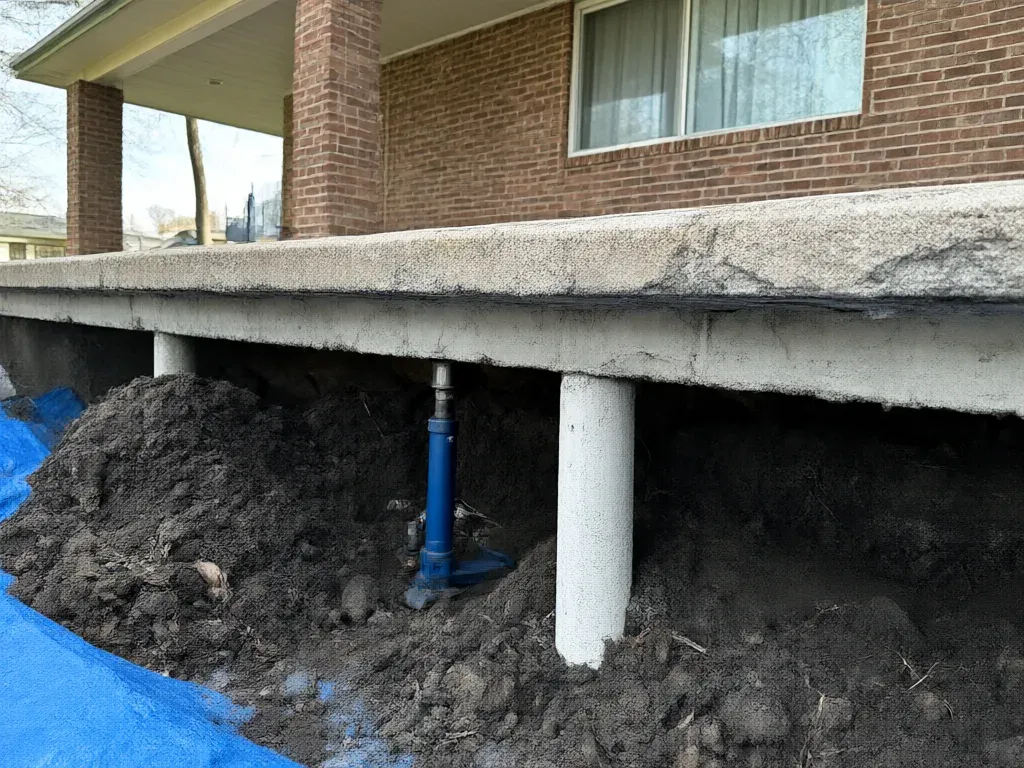
Slab Foundation Repair in North Richland Hills, TX
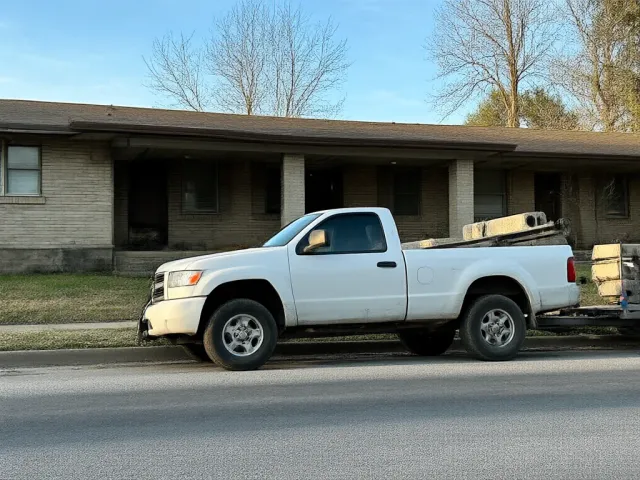
North Richland Hills Superior Foundation Repair offers professional slab foundation repair in North Richland Hills, TX with 21 years of experience and 3,750+ foundations repaired since 2005. We underpin slab-on-grade houses with pressed concrete pilings, drilled bell-bottom piers or steel push piers set under the perimeter grade beam, then lift with hydraulic jacks and hold the slab with steel shims. Most slab jobs run 8 to 14 exterior piers and take 1 to 2 days on site.
Slab repair here is mostly about clay. A slab on grade rides on whatever soil is under it, and expansive clay swells when it's wet and shrinks when it's dry, so the edges drop first. We find the low areas with a digital manometer survey and have an independent engineer design the repair. We also test the drain line before and after the lift so a hidden slab leak doesn't undo the work.
Get a FREE Estimate
Or call (817) 918-8523
Slab Foundation Repair Methods
The engineer picks the method for your house. Here's what each one is and when it gets used.
Slab Repair with Pressed Concrete Pilings
Precast cylinders 6 inches across and 12 inches long, pressed one at a time with a hydraulic ram until the house won't push them any further. In this area that usually means 10 to 20 feet down. They're the workhorse for single-story brick ranches, at $350 to $500 per pier.
Slab Repair with Drilled Bell-Bottom Piers
A 12-inch shaft drilled 10 to 12 feet deep, belled to 24 to 30 inches at the bottom, reinforced with four #4 bars and filled with 3,000 PSI concrete. Engineers specify them for heavier two-story slabs and additions. They need a 7-day cure before the lift and run $850 to $1,400 per pier.
Slab Repair with Steel Push Piers
Galvanized 2-7/8-inch pipe in 3-foot sections, driven through a steel bracket bolted to the grade beam. They reach 18 to 35 feet when a heavy slab needs deeper bearing than a pressed piling will find. Expect $1,200 to $1,900 per pier.
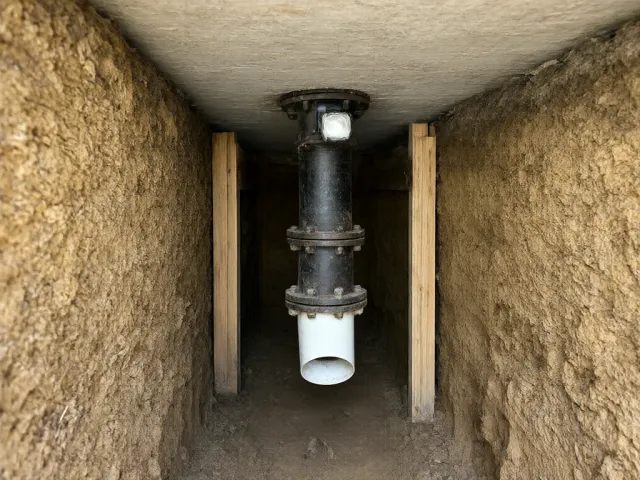
Slab Repair with Interior Piers Through a Tunnel
When the low spot is in the middle of the house, the engineer may call for interior support. We tunnel under the slab from outside, about 30 inches wide by 36 inches tall, so tile and hardwood stay put. Piers set straight through the slab are an option too, at $600 to $900 per pier plus flooring.
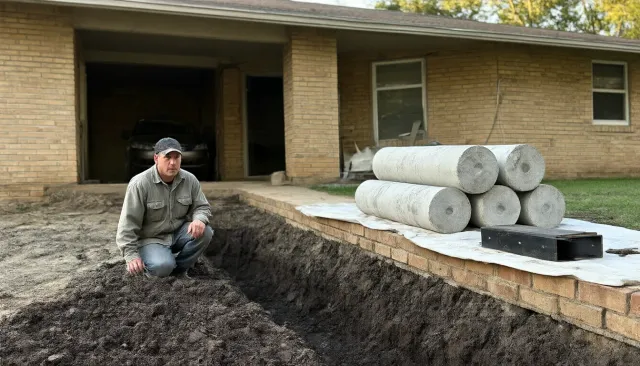
Slab Repair for Post-Tension Foundations
Post-tension slabs, common here from the 1980s on, get their strength from steel tendons cast into the concrete. We locate the tendons before anyone cores, saws or tunnels near them. The engineer decides whether a tendon needs re-stressing after the lift.
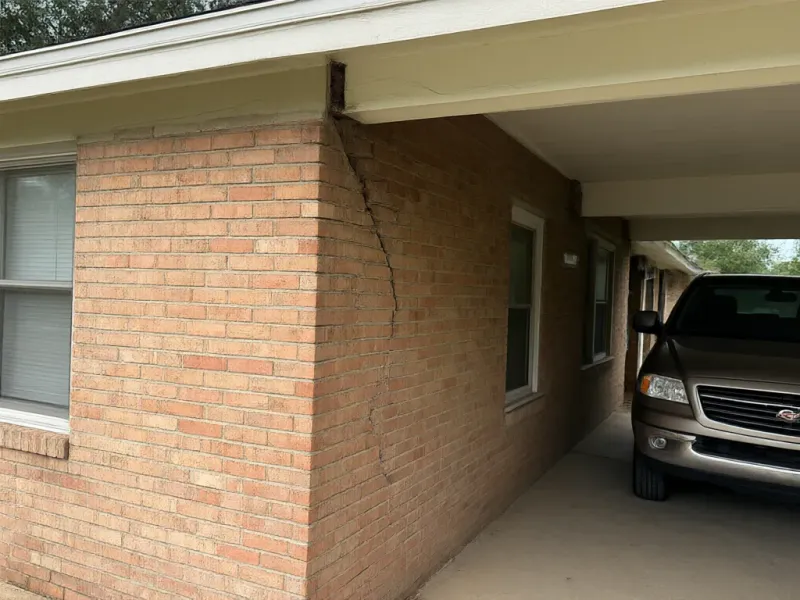
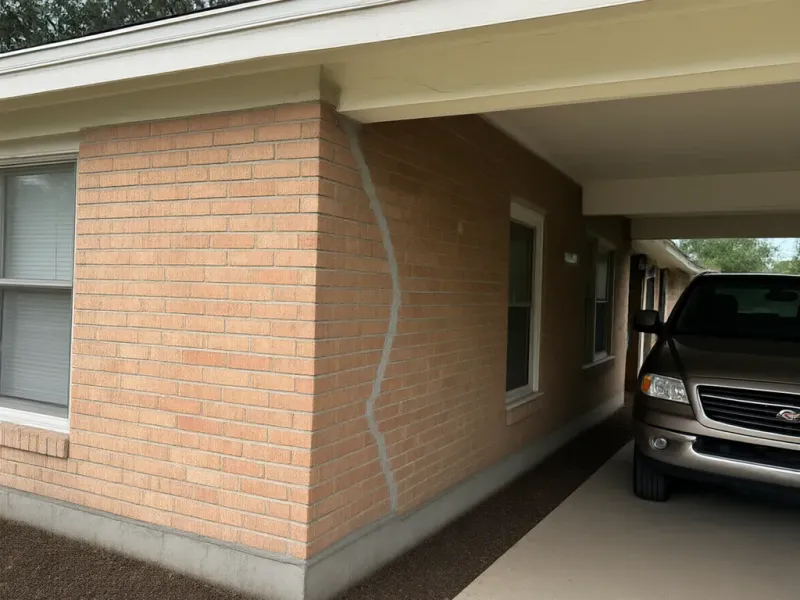
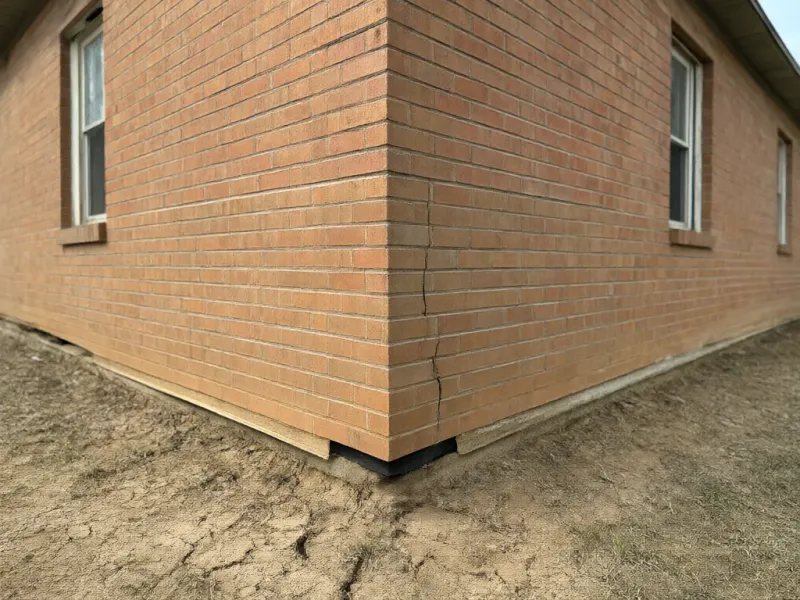
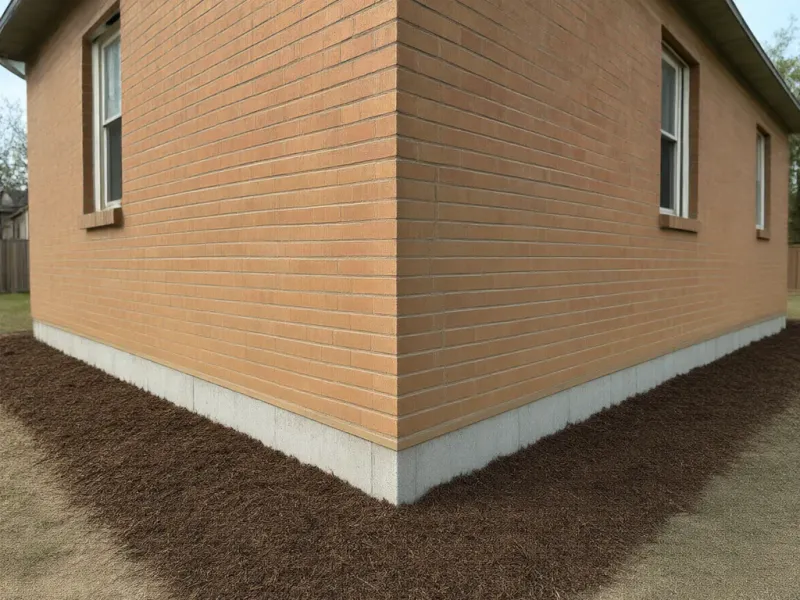
Before and After
Signs Your Slab Foundation Needs Repair
On a slab house the brick usually talks first. A stair-step crack through the mortar joints under a window, a gap opening between the brick and a window frame, or a crack running up from the corner of the garage door are the classic ones.
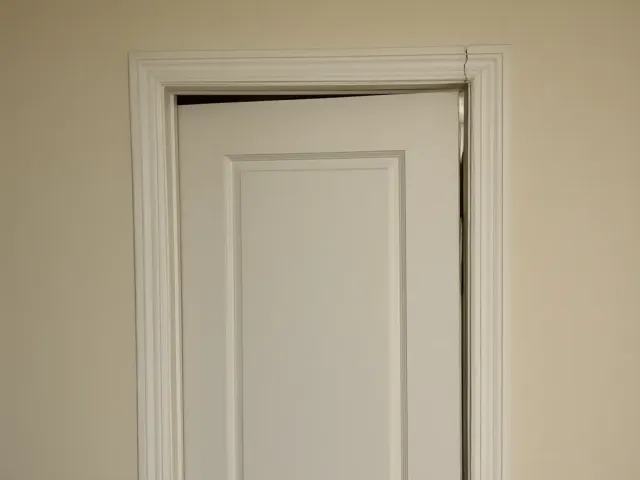
Inside, watch the doors. A door that latched fine in spring and won't latch in August, or a wedge-shaped gap at the top of the frame, means the slab under that wall has moved. Tile cracks that run in a straight line across a room are another tell.
Not every crack means piers. Some movement is seasonal on clay, and a crack that opens in summer and closes by March may only need watching. The floor survey tells us which kind you have, and we'll say so either way.
What Our Slab Repair Price Includes
Every slab job includes the independent engineer's design letter and final compliance letter, the city permit where one is required, the Texas811 utility locate, and the drain-line static test before and after the lift. Those aren't add-ons. A typical repair of 8 to 14 exterior piers runs $3,800 to $8,500 with all of it in the number.
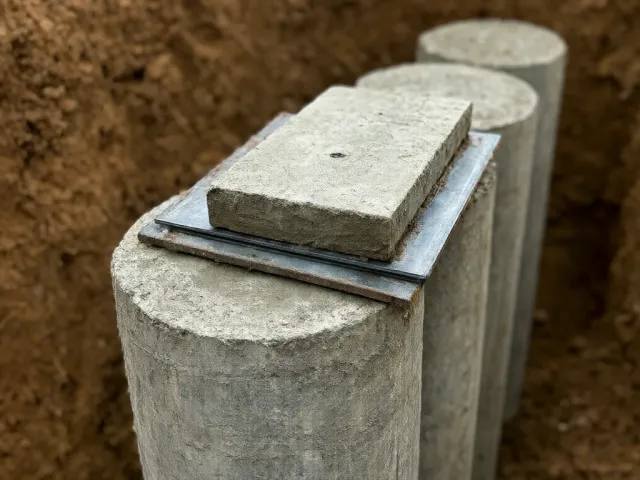
Each pier includes a precast concrete cap, steel shims and a concrete block between the pier and the grade beam. Wood shims rot and crush in wet clay. Steel doesn't, and it turns any future adjustment into a short visit instead of a rebuild.
After the lift we backfill and compact the pier holes, re-survey the floor and hand you both sets of numbers. Don't expect perfectly level. The ASCE Texas Section guideline itself says a lifted foundation rarely ends up level, and forcing it cracks more than it fixes.
Why Slab Leaks and Slab Repair Go Together
Older slab houses often still have their original cast-iron drain lines underneath. A crack in the drain soaks one spot of clay, the slab sags there, and from inside the house the sag looks exactly like foundation settlement.
That's why we static-test before we lift. The drain gets plugged at the cleanout, filled and held for 15 minutes. If it holds, we lift. If the level drops, a plumber licensed by the Texas State Board of Plumbing Examiners finds the break first.
We test again after the lift, because raising a slab can stress an old joint. Any leak gets fixed before we sign off, and the results go in your file with the engineer's letter.
Our Slab Foundation Repair Process
Floor survey
We take digital manometer readings in every room on roughly a 10-foot grid and mark the low areas on a floor plan you keep.
Engineer's design
An independent licensed engineer reviews the survey, visits the house and writes a letter that sets the pier type, count and locations.
Permit, locate and pre-test
We pull the city permit where required, notify Texas811 at least 48 hours ahead, and static-test the drain line.
Piers and lift
The crew digs at the grade beam, installs the piers, lifts gradually with hydraulic jacks and locks the slab in with steel shims.
Retest and closeout
We retest the plumbing, backfill, re-survey the floor and deliver the engineer's compliance letter and your pier warranty.
Slab Foundation Repair FAQ
How many piers does a slab repair usually need?
It depends on how much of the slab moved. Most of our jobs run 8 to 14 exterior piers, set 6 to 8 feet on center along the grade beam. The engineer's letter sets the count, not a salesman.
Can you repair my slab without breaking up the floors?
Usually, yes. Exterior piers go in from outside the house. If the engineer wants interior support, we tunnel under the slab from outside instead of breaking tile or hardwood.
Will my slab be perfectly level afterward?
No, and anyone promising that is overselling. We lift to the best practical level the brick and drywall will tolerate, and you'll see the before and after survey numbers.
Can we stay in the house during slab repair?
Yes. Exterior pressed piling jobs take 1 to 2 days, the work happens outside, and the crew backfills the holes before they leave.
Is the slab repair warranty transferable?
Yes. The lifetime transferable warranty on every pier we install moves to the next owner free if they register within 30 days of closing. It covers the piers we installed, not areas we didn't pier.
Get Your Slab Surveyed for Free
Call (817) 918-8523 to book a free slab inspection. We'll get out within 2 business days and leave a written estimate the same day.