
House Leveling in North Richland Hills, TX
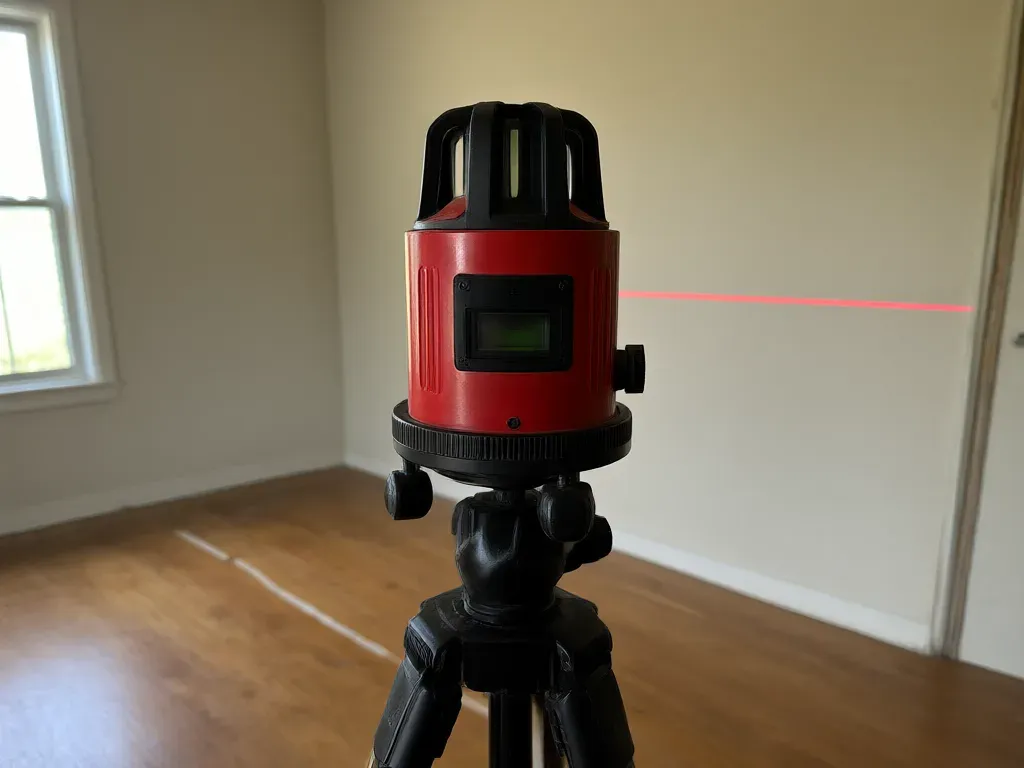
North Richland Hills Superior Foundation Repair offers professional house leveling in North Richland Hills, TX with 3,750+ foundations repaired since 2005. We level slab houses on pressed concrete pilings or bell-bottom piers, and pier and beam houses by resetting supports and shims. Hydraulic jacks bring the low areas back up a little at a time while a digital manometer tracks the floor. A whole-house pier and beam leveling job runs $3,500 to $12,000.
Leveling is the part of foundation repair you can feel. Doors latch again, the marble stops rolling toward the hallway, and gaps under the baseboards close. The goal is the best practical level the house will tolerate, not a laser-flat floor, and we show you the before and after numbers so you know exactly what moved.
Get a FREE Estimate
Or call (817) 918-8523
House Leveling Methods
House Leveling on Pressed Concrete Pilings
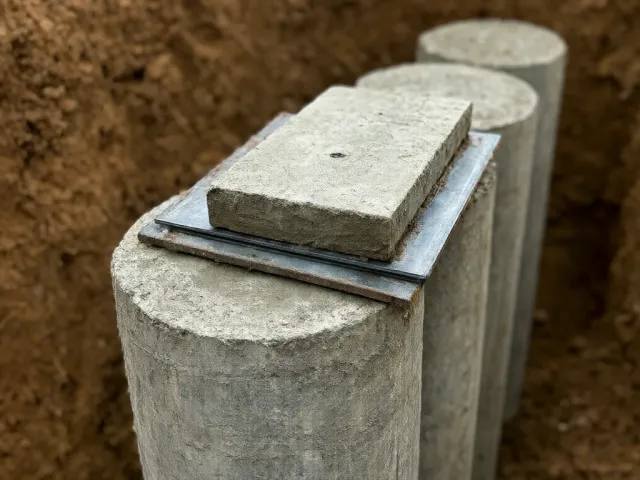
For most slab houses, leveling happens on top of new pressed pilings. Jacks sit on each pier cap, the crew raises the grade beam in small steps across several piers at once, and steel shims lock in the new height. An exterior job of 8 to 14 piers takes 1 to 2 days.
House Leveling for Pier and Beam Homes
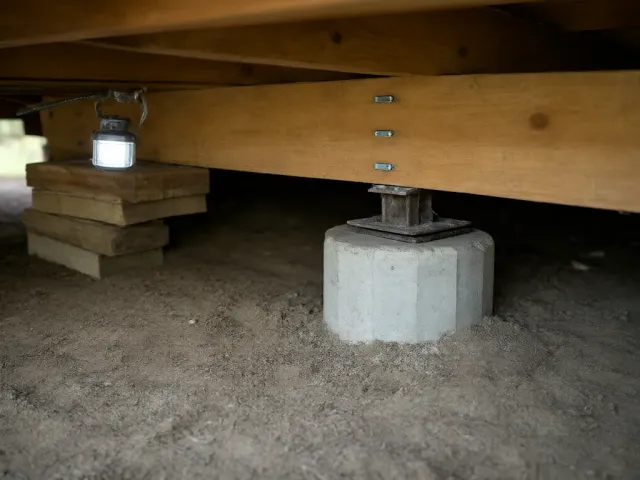
Under a pier and beam house we jack the beams from the crawl space, replace failed supports with poured footings and block piers, and shim with steel. New supports run $300 to $550 each, and a whole-house job takes 2 to 4 days.
House Leveling with Bell-Bottom Piers
Heavier houses sometimes get drilled bell-bottom piers instead. The shafts are drilled and poured first, then cure for 7 days, and the crew comes back to do the leveling once the concrete is ready to carry the load.
Partial House Leveling for One Side or Corner
Most houses don't need every wall lifted. When the survey shows the low area is one corner or one side, the engineer specifies piers only there, and the crew levels that section back toward the rest of the house. It costs less, and it's honest about what the warranty covers.
House Leveling After a Slab Leak
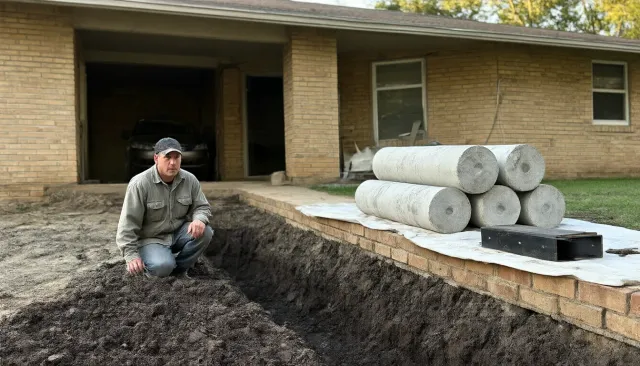
When a drain leak softened the clay under one room, the leak gets fixed first through a tunnel, then interior piers go in from the same tunnel. Leveling over an active leak just sets the house up to drop again.
Before and After
What Level Really Means for a House
Very few houses were built perfectly level, and none stay that way on clay. Engineers here judge a floor against the ASCE Texas Section benchmark of L/360, the span length divided by 360. Over a 30-foot span, that works out to 1 inch.
The same guideline says floor tilt over 1 percent is usually noticeable, and it cautions against reading too much into differences over less than about 20 feet, because built-in unevenness shows up at short distances. A single low reading in a hallway doesn't mean much on its own.
That's why leveling targets come from the engineer. The aim is to bring the low areas back toward the rest of the house without overstressing brick, drywall and plumbing that have been sitting in their current shape for years.
What You'll Notice During and After Leveling
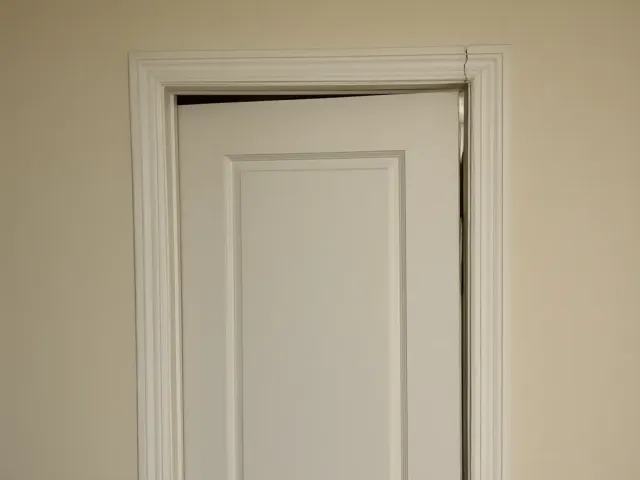
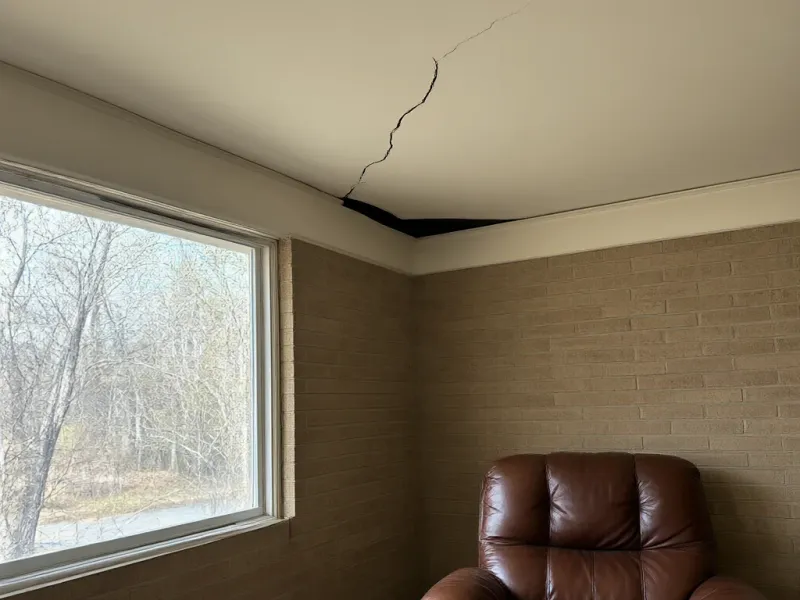
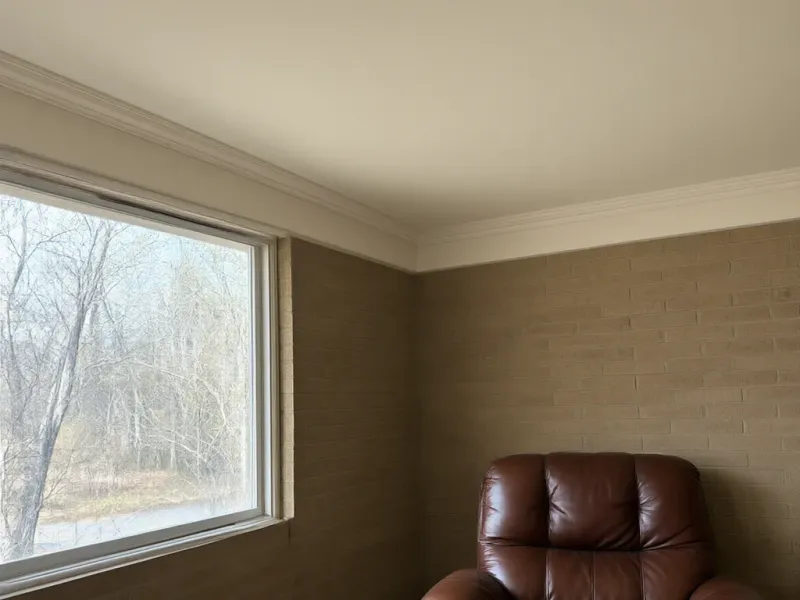
Many cracks start closing as the low side comes up, and it's common to hear a door you haven't been able to close swing shut on its own. We lift slowly so the house has time to follow.
A few new hairline cracks can appear where old drywall patches were holding the house in its settled shape. That's normal and cosmetic. Brick cracks that don't close fully can be repointed with matched mortar at $400 to $1,100 per wall section.
Doors that were trimmed or re-hung to fit a sagging frame may need a small adjustment once the frame is square again. Before we leave, we retest the plumbing and give you the final survey.
When House Leveling Isn't the Answer
If the survey is inside L/360, leveling usually isn't worth it. A family in a 1979 house in Watauga called about a sticking bedroom door in August. The survey showed about 0.6 inch of difference over 30 feet, so we fixed the downspout, set up a soaker hose, and the door closed again by March.
Leveling also waits when the soil is about to change. If a big tree next to the house was just removed, the clay under it can swell back up for a while, and lifting too soon can leave that corner high. The engineer may recommend a waiting period first.
Our House Leveling Process
Baseline survey
We take manometer readings on roughly a 10-foot grid and photograph the existing cracks so everyone can see what changed.
Engineer's targets
The independent engineer sets the pier layout and how far each area should come up, based on the survey and the house.
Pre-lift plumbing test
We static-test the drain line, holding it for 15 minutes, so we know its condition before anything moves.
Staged lift
Jacks raise the house in small, even steps while one person watches the cracks, doors and survey readings inside.
Lock in and verify
Steel shims hold the new height, we retest the plumbing, re-survey every room and give you the before and after numbers.
House Leveling FAQ
How far can you lift a house?
As far as the engineer's target and the house itself allow. The brick, drywall and plumbing set the practical limit, so we stop at the best practical level instead of forcing the last fraction of an inch.
Can we stay home during house leveling?
Yes. Most of the work happens outside or under the house. You'll hear the jacks and might feel a door shift, but you don't need to move out.
Will my doors work again after leveling?
Most do. Doors that stuck because the frame racked usually swing freely once the wall comes back up. A door that was trimmed to fit the old shape may need a small adjustment.
How long does house leveling take?
An exterior slab job of 8 to 14 piers takes 1 to 2 days. Whole-house pier and beam leveling takes 2 to 4 days, and bell-bottom piers add a 7-day cure before the lift.
Is house leveling covered by a warranty?
Every pier we install carries a lifetime transferable warranty, so if a warranted pier settles we re-adjust it free. A pier and beam re-shim with no new supports comes with one free re-shim within 12 months.
See How Far Out of Level Your House Is
Call (817) 918-8523 for a free floor survey. You'll see the numbers room by room, and Curtis will tell you whether leveling is worth doing.