
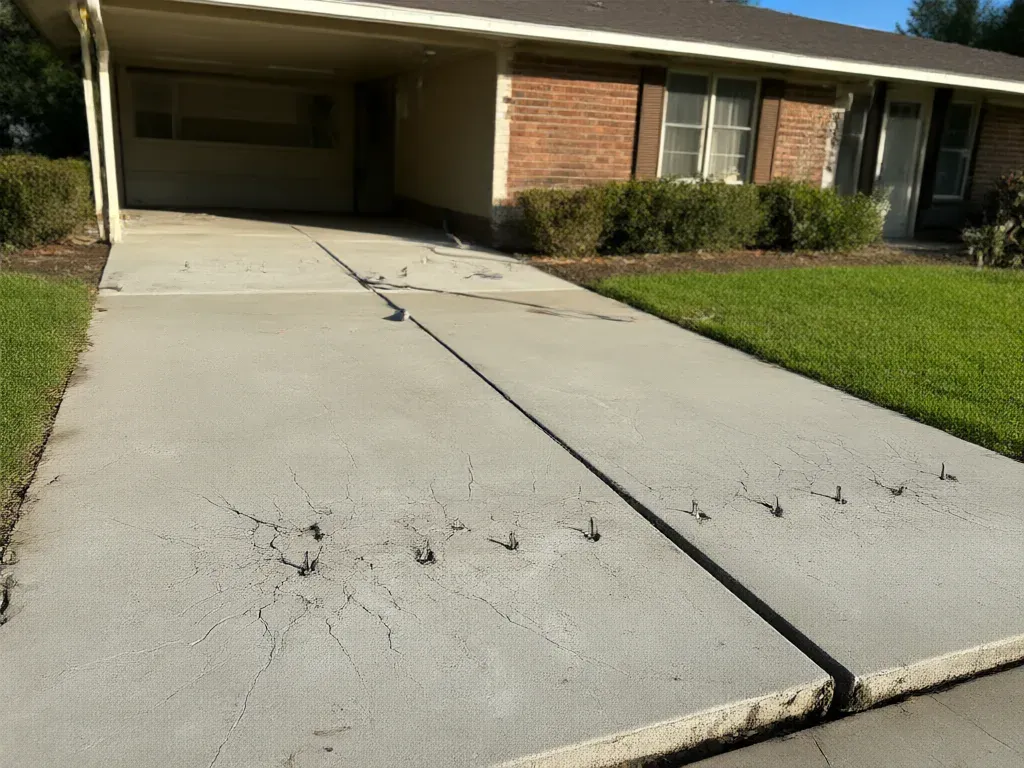
Concrete Leveling and Slab Jacking in North Richland Hills, TX
North Richland Hills Superior Foundation Repair offers professional concrete leveling and slab jacking in North Richland Hills, TX, lifting sunken driveways, sidewalks, patios and porch slabs back into line instead of tearing them out. We use two methods: traditional mudjacking with a cement and soil slurry pumped through 1-1/2 to 2-inch holes, and polyurethane foam injected through 5/8-inch holes. Mudjacking runs $4 to $7 per square foot and foam leveling $7 to $12.
Flatwork sinks for the same reasons foundations do. Soil washes out from under the edges, clay shrinks in a dry summer, or fill under a newer pour was never compacted. Slab jacking fills the void and lifts the panel in one step, usually in half a day per driveway, and every lifted panel carries a 2-year warranty.
Get a FREE Estimate
Or call (817) 918-8523
Concrete Leveling Services
Slab jacking works on any flat concrete that's still in one piece. These are the jobs we do most.
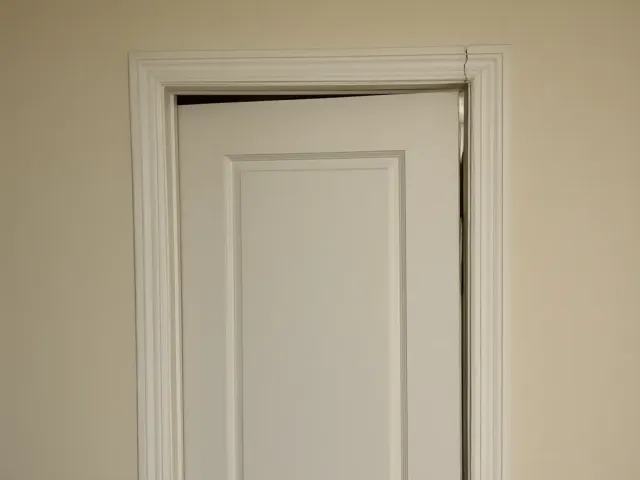
Concrete Leveling for Driveways
A driveway panel that drops at the garage or the street creates a lip you feel every time you pull in. We drill the low panel, pump material underneath and bring it back flush with its neighbors. Most driveways take half a day. Lifting a panel costs a fraction of a tear-out and repour, and you're not parking on the street while new concrete cures.
Concrete Leveling for Sidewalks and Walkways
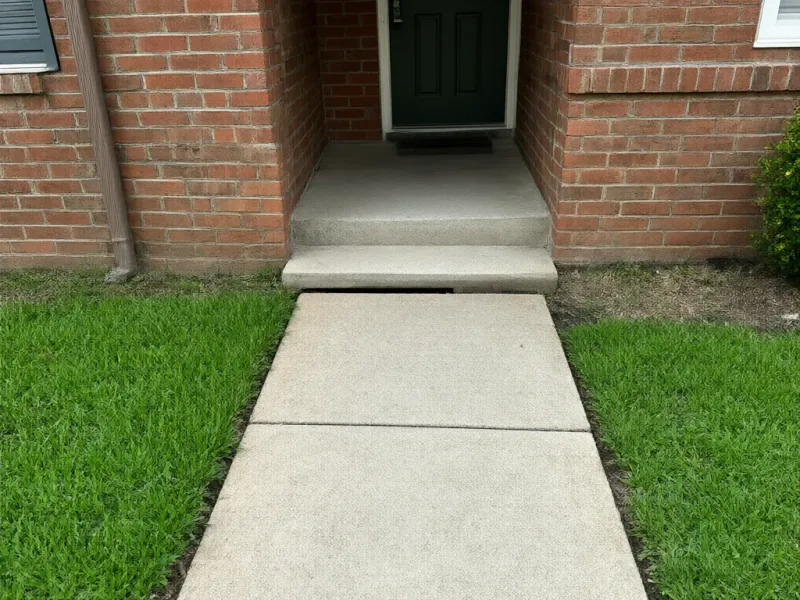
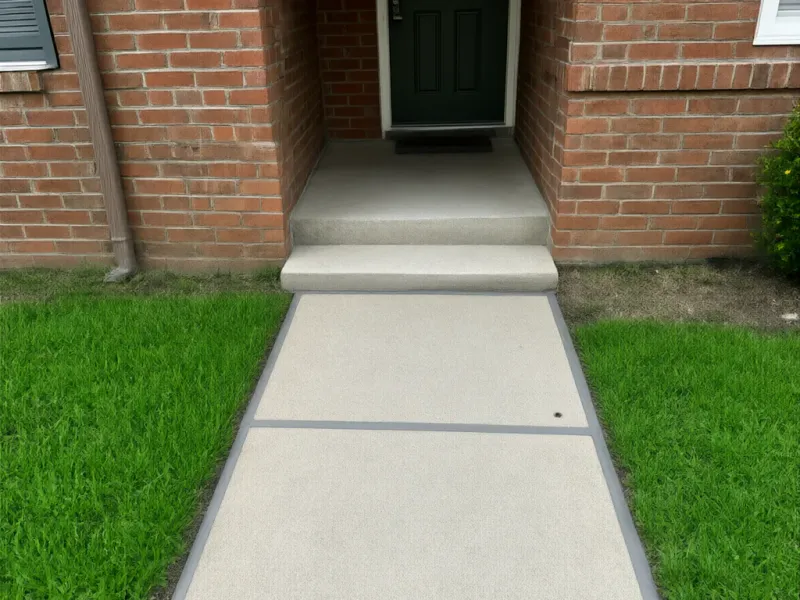
A sidewalk panel that's dropped an inch is a trip hazard, especially for older family members and kids on bikes. Foam leveling brings it back with 5/8-inch holes and the walk can be used right away.
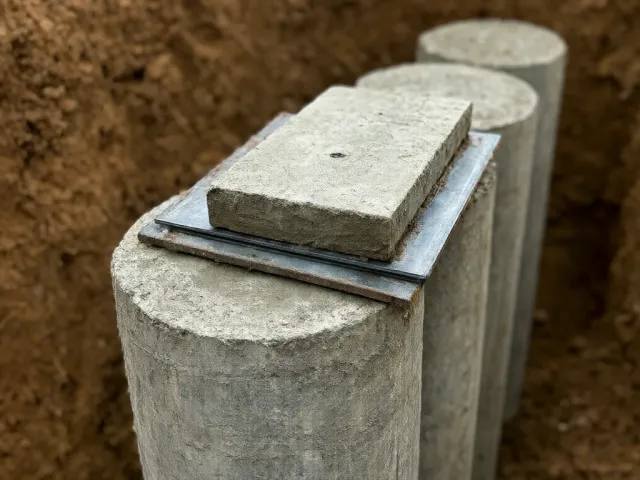
Concrete Leveling for Patios and Porches
A patio that has settled toward the house sends rainwater straight at the grade beam. We lift it so it falls away from the foundation, which fixes the patio and helps the slab at the same time.
Concrete Leveling for Pool Decks
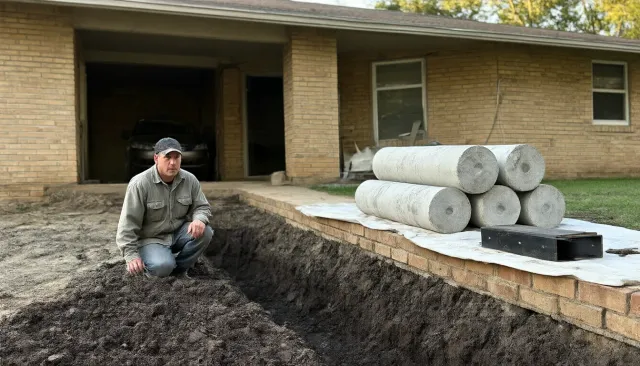
Sunken pool deck panels open gaps at the coping and let water get under the deck. Foam is our usual choice here because it's light and goes in through small holes. We locate the pool plumbing before we drill.
Concrete Leveling for Breezeways and Commercial Walks
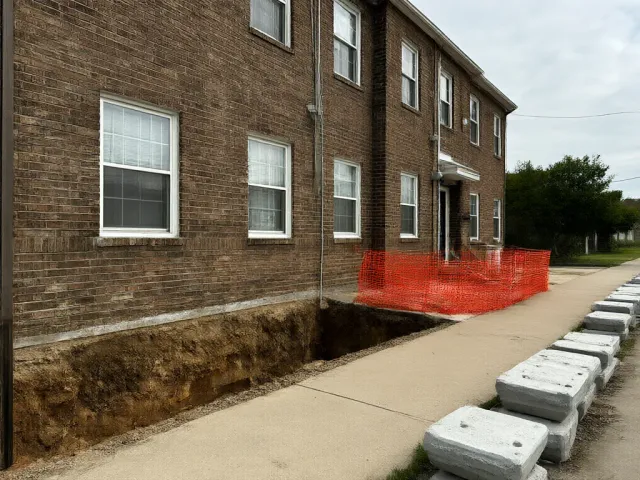
Apartment breezeways, storefront walks and church sidewalks see heavy foot traffic and carry real liability. We work section by section with cones and barricades so the rest of the walk stays open.
Before and After
Mudjacking Versus Polyurethane Foam Leveling
Mudjacking is the older method. A cement and soil slurry gets pumped through 1-1/2 to 2-inch holes, fills the void and lifts the slab hydraulically. It's the cheaper option at $4 to $7 per square foot, with a $550 minimum, and it handles big voids under thick panels well.
Polyurethane foam is injected through 5/8-inch holes, expands to fill the void and lifts the panel. It's much lighter than slurry, it doesn't wash out, and you can drive on it the same day. It costs more, $7 to $12 per square foot with a $750 minimum.
Our rule of thumb: foam for driveways, pool decks and anywhere the soil is already soft, and mudjacking for heavy, thick slabs with large voids where cost matters most. We'll tell you which one we'd use on your concrete and why.
Why We Don't Mudjack Under a House
Some companies will offer to mudjack a house slab because it's fast and cheap. We won't. Slurry under a house adds weight to the same clay that already let the slab down, and it does nothing about why the soil moved.
Engineers in Texas are cautious about it for good reason. If the soil under a house swells later, a solid mass of grout can make the damage worse. House slabs get underpinned with pressed concrete pilings, bell-bottom piers or steel push piers, to an engineer's letter.
Driveways, sidewalks and patios are different. They carry light loads, they're not tied to the house, and lifting them with slurry or foam is exactly the right repair.
When a Panel Should Be Replaced, Not Lifted
Slab jacking works on panels that are still in one piece. A panel broken into several chunks will lift unevenly, and the cracks will keep moving. That's a replacement job.
Concrete pushed up by tree roots can't be lowered by jacking. The roots have to be dealt with first, sometimes with a root barrier, and the raised section is usually cut out and repoured.
We'll also tell you when the money is better spent elsewhere. If water from a downspout washed out the soil under the driveway, the drain line comes first, or the panel will sink again.
Garage floors are a gray area. The garage slab is often poured with the house foundation, so a sunken garage floor can be a foundation symptom rather than a flatwork one. We survey it with the rest of the house before deciding.
Keeping Lifted Concrete Where We Put It
Most flatwork sinks because water gets under it. After every lift we seal the joints and the edge where the concrete meets the house with a flexible sealant, so rain can't keep washing soil out from underneath.
The drill holes get patched with a cement grout mixed as close to your concrete's color as we can get it. On older driveways the patches usually blend in after a season or two.
We also look at what's sending water there in the first place. Downspouts that empty onto the driveway get their own solid pipe, at $18 to $30 per linear foot, and washed-out edges get backfilled and compacted.
Do those things and a lifted panel usually stays put. If one of the panels we lifted settles within 2 years, we come back and lift it again under the warranty.
Get a Price on Your Sunken Concrete
Call (817) 918-8523 and we'll measure the panels, tell you whether foam or mudjacking makes sense, and put the price in writing.