
Pier and Beam Foundation Repair in North Richland Hills, TX
North Richland Hills Superior Foundation Repair offers professional pier and beam foundation repair in North Richland Hills, TX with crews who have worked in crawl spaces since 2005. We re-shim sagging floors with steel shims, replace rotted cedar stumps with poured concrete footings and block piers, and swap damaged sills, joists and girders for pressure-treated lumber. Most re-shim and adjust jobs on a single-story house run $650 to $2,400 and take 1 day.
Pier and beam houses move differently from slabs. The floor framing sits on interior supports and a perimeter beam, so trouble shows up as soft, bouncy or sloping floors, sticking doors and gaps under the baseboards. We go under the house, check every support, measure the floor with a digital manometer, and fix the framing and the supports together.
Get a FREE Estimate
Or call (817) 918-8523
Pier and Beam Foundation Repair Options
Pier and Beam Re-Shimming and Adjustment
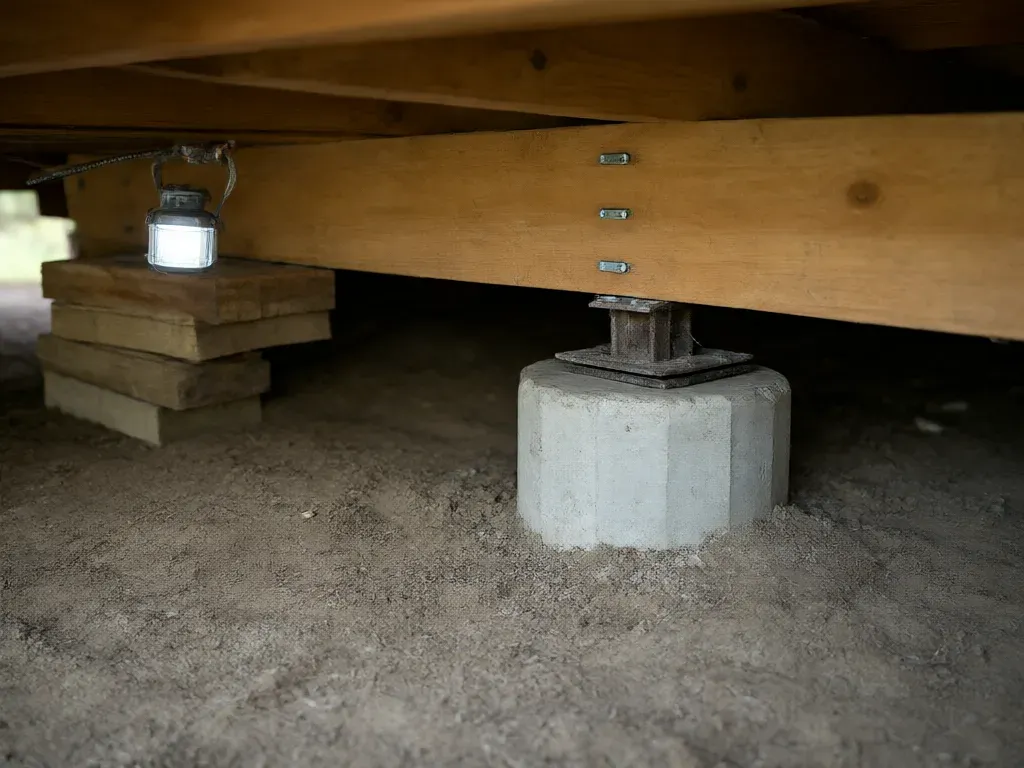
When the supports are sound but the floor has drifted, we jack the beam off each support, replace the shims and set it back down to a level line. Steel shims don't compress like the old cedar wedges. A re-shim with no new supports comes with one free re-shim within 12 months.
Pier and Beam Support Replacement
Old cedar stumps and loose stacked blocks get pulled out. In their place we pour a concrete footing, set a concrete block pier and shim to the beam with steel. New supports run $300 to $550 each.
Pier and Beam Sill, Joist and Beam Replacement
Termites and years of damp crawl-space air rot out sill plates, joists and girders. We cut out the bad sections and sister or replace them with pressure-treated lumber. Sill and beam replacement runs $40 to $85 per linear foot.
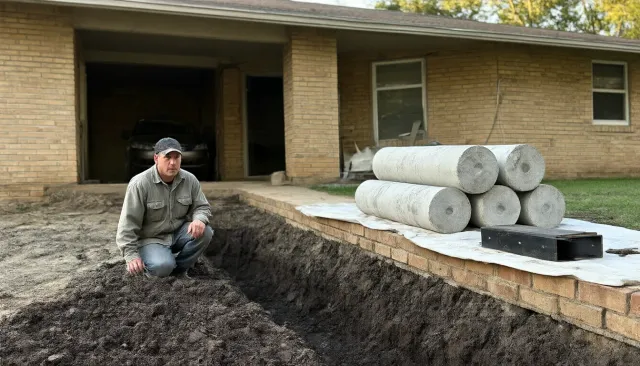
Pier and Beam Perimeter Beam Underpinning
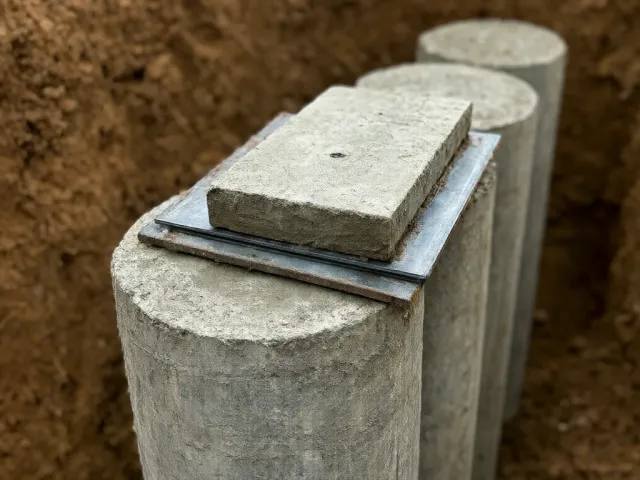
The concrete perimeter beam on a pier and beam house can settle just like a slab's grade beam, and the brick on top cracks the same way. We underpin it with pressed concrete pilings at $350 to $500 per pier, built to the engineer's letter.
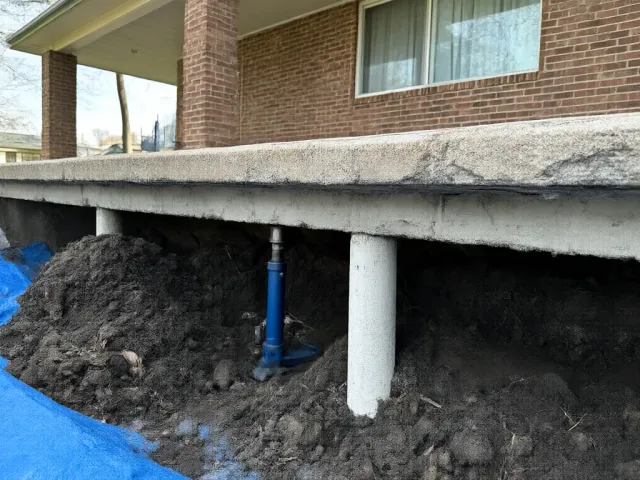
Pier and Beam Crawl Space Moisture Control
Wet dirt and dead air under the floor rot framing faster than anything else. We reopen blocked vents for cross-ventilation, regrade so water drains away from the perimeter, and lower the soil where joists sit too close to it.
Before and After
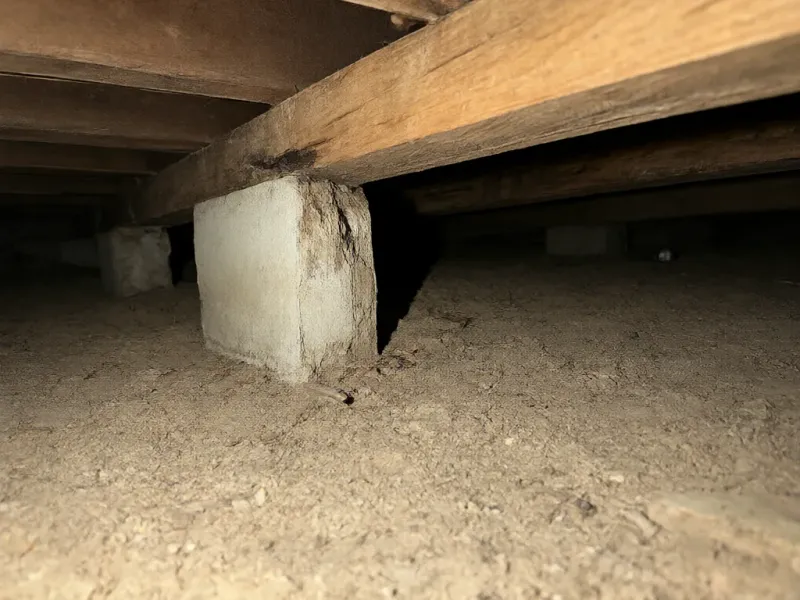
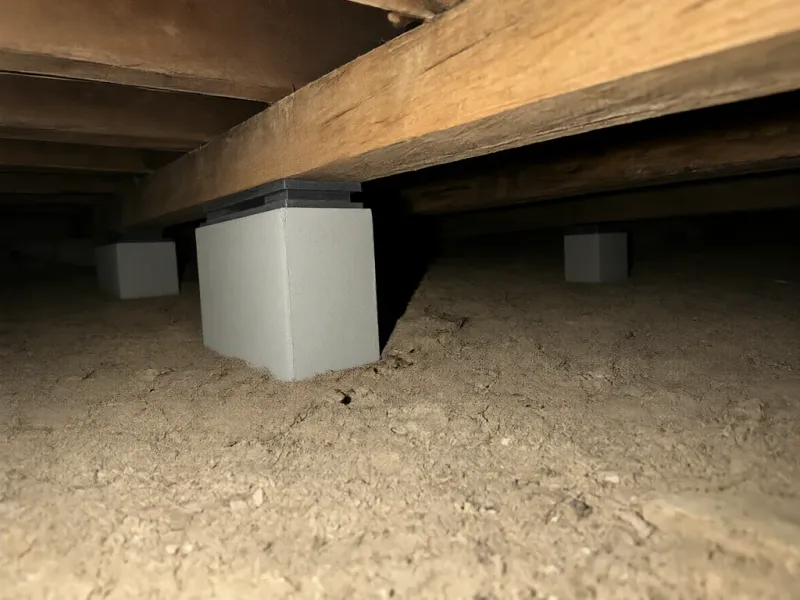
Signs of Pier and Beam Foundation Problems
Floors that slope toward the middle of the house usually mean the interior supports have sunk or rotted. Floors that slope toward an outside wall point at the perimeter beam. Each one gets a different fix, which is why we look before we quote.
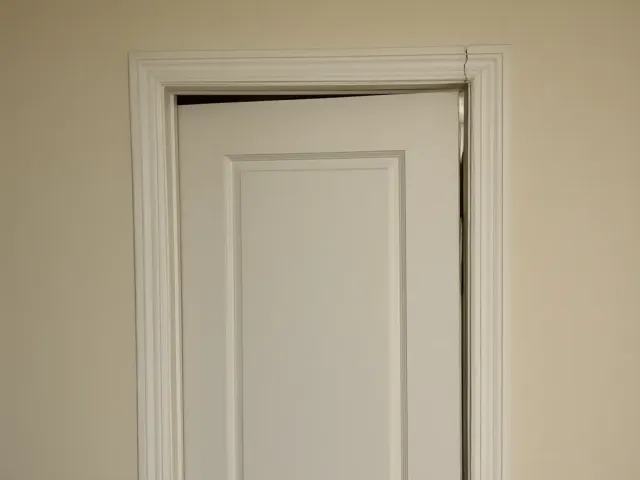
A soft or bouncy spot between supports usually means the span is too long or a joist is damaged. You might also see gaps opening under baseboards, doors that swing on their own, and cracked plaster at the corners of door frames.
Pier and beam floors move more with the seasons than slab foundations do. Some movement is expected. But if doors won't latch or you can feel a clear slope while walking, you need a floor survey.
What We Find Under Older Crawl-Space Houses
Most crawl spaces tell a story of water and rot. We see these issues most often when we pull the access cover.
Cedar Stumps and Stacked Blocks
Many homes built in the 1940s and 1950s sit on cedar stumps in the dirt. Decades later, many of those have rotted away. You'll often find loose blocks and wood shims stacked on top of the rot to level the floor. You can't fix rot with shims alone. We replace those old supports with poured concrete footings and block piers.
Spans That Are Too Long
Some houses were built with supports spaced too far apart for the load on the floor, or lost a support to an old remodel. The fix is an added footing and block pier under the beam, sized to match the supports around it.
Framing Too Close to the Dirt
The residential code wants treated lumber when wood joists are closer than 18 inches to exposed ground, or girders closer than 12 inches. Older houses often sit lower than that. When we replace framing in a low crawl space, it's pressure-treated, and we dig out the soil where we can to open up clearance.
Why Pier and Beam Repair Often Costs Less Than People Expect
Everything on a pier and beam house is reachable from the crawl space. There's no concrete to break and no tunnel to dig, so the crew spends its time on the actual repair.
Most single-story re-shim and adjust jobs run $650 to $2,400. When the house needs a lot of new supports and framing, whole-house leveling runs $3,500 to $12,000, and you'll see each support and each foot of lumber itemized on the estimate.
Think of a re-shim as maintenance. The clay under the supports still swells and shrinks, so a pier and beam floor may need another adjustment down the road. Poured concrete supports with steel shims make those visits short.
Our Pier and Beam Repair Process
Crawl space inspection
Curtis goes under the house with a light, checks every support, the beam and the framing, and photographs what he finds.
Floor survey and plan
We take manometer readings on roughly a 10-foot grid, then write a support-by-support plan, with an engineer's letter when framing or the perimeter beam changes.
Access and locate
We open up crawl access, protect the yard, and notify Texas811 at least 48 hours ahead whenever perimeter piers need digging.
Supports and framing
The crew pours new footings, sets block piers, replaces rotted wood with treated lumber, and jacks the beams up a little at a time.
Level, re-survey and clean up
We set steel shims, re-survey the floor, close the crawl space back up, and give you the before and after numbers.
Pier and Beam Foundation Repair FAQ
How often does a pier and beam house need re-shimming?
It depends on the drainage and the supports. A dry crawl space with sound concrete supports can go a long time between adjustments, while a wet one moves more. Every re-shim we do comes with one free re-shim within 12 months.
Do you need to get under the house?
Yes. You can't diagnose a pier and beam floor from inside the house. We need to see the supports, the beam and the framing before we write an estimate.
Is an engineer needed for pier and beam repair?
For a simple re-shim, usually not. When we add supports, replace framing or underpin the perimeter beam, an independent engineer writes the plan, and we pull a city permit wherever one is required.
What if you find termite damage?
We'll show you the damaged wood and replace it with pressure-treated lumber. You'll want a licensed pest control company to treat the colony before we close things back up.
Will my floors be perfectly flat after the repair?
Older framing often has sag built into it, so perfectly flat isn't realistic. We level to the best practical line the house allows and show you the survey numbers before and after.
Have Us Check Your Crawl Space
Call (817) 918-8523 for a free pier and beam inspection. Curtis will go under the house himself and leave a written estimate the same day.